SaaS Cancellation Flows and Exit Surveys That Recover Revenue
A well-designed cancellation flow does two things: it collects the data you need to fix churn at the source, and it gives at-risk customers a reason to stay. Practical guidance on exit survey design, save offers, and the line between retention and dark patterns.
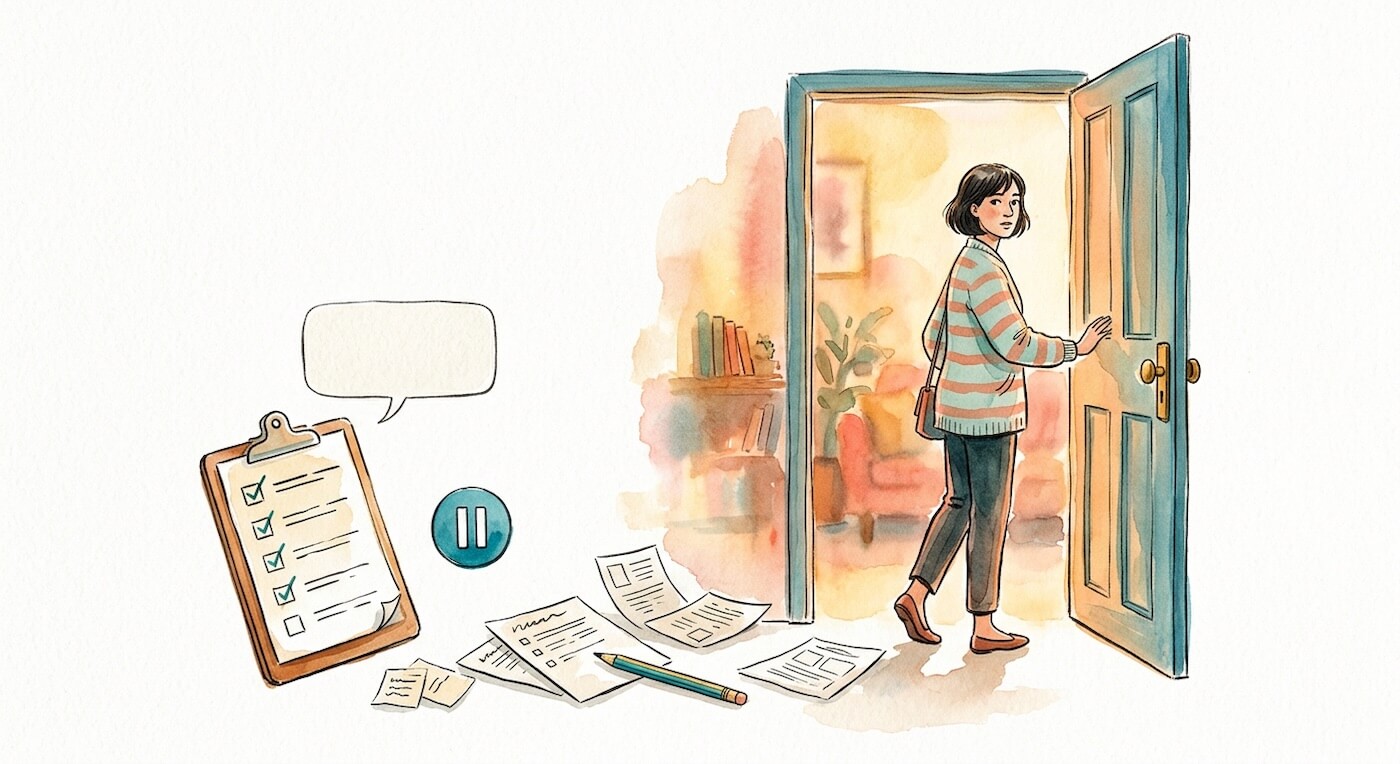
Most SaaS products treat cancellation as a single button and a lost customer. Click, confirm, goodbye. That’s leaving both data and revenue on the table. The gap between companies that know this and those that don’t is wide.
A well-designed cancellation flow saves 20–40% of would-be churners according to converging data from Churnkey (analysing 3M+ cancellation sessions), Paddle/ProfitWell Retain (25–30% of at-risk customers retained), and Chargebee (23% of cancellations prevented on average with personalised offers). The commonly cited “10–20%” figure is a floor. It represents a functional but passive flow with minimal personalisation. Push the design further and the numbers push back.
Every voluntary churn event carries a signal. A customer cancelling because the product is too expensive is a different problem from one leaving because they found a competitor, which is a different problem again from one who never properly onboarded and doesn’t see the value. A subscription cancellation flow that doesn’t distinguish between these is blind.
Key Takeaways
- Exit surveys with a single multiple-choice question collect enough signal to personalise offers. Every question beyond the first drops your save rate by 6.7% according to Churnkey’s dataset of 2M+ responses.
- Matching the offer to the exit reason (pause for “not using it enough,” discount for price, downgrade for overserved customers) materially changes save rates. Generic retention offers underperform by a significant margin.
- Customers who accept a pause stay for 5.5 additional months on average; those who downgrade stay 7–8 months longer. One-time discounts are the weakest lever in the toolkit.
- Post-cancellation win-back campaigns recover 5–15% of churned customers. The optimal window is 30–90 days, with Day 30 as a value reminder and Day 60–90 introducing a meaningful offer.
- Dark patterns don’t reduce churn. They generate chargebacks, support costs, and regulatory fines. California’s 2025 law now sets a de facto national standard for what a compliant cancellation flow looks like.
Why your cancellation flow matters
A cancellation attempt is a late-stage retention conversation with a customer who’s still in your product, still logged in, and still telling you exactly why they’re leaving. Most SaaS businesses treat it as an administrative step. That’s the mistake.
Chargebee’s research found that personalised retention offers prevent 23% of cancellations on average, but the operative word is personalised. A customer cancelling over price who gets offered a pause isn’t retained. A customer leaving because they’re not getting value who gets a discount is, at best, delayed. They’ll cancel again next month.
The save rate ceiling is higher than most founders expect. Churnkey’s 2025 State of Retention report, drawn from over 3 million cancellation sessions, put their average platform save rate at 34%. Lifeboost improved from a 5% save rate to 27% after implementing a structured cancellation flow. ClickFunnels found that leading with downgrade offers instead of discounts improved their save rate by 130% in a single month.
Clear cancellation flows also reduce chargebacks. Stripe charges $15–20 per dispute regardless of outcome. Customers who hit a confusing cancellation experience often solve the problem by calling their bank instead. A clear flow, with a clear confirmation and an explicit end date, closes that loop.
What to include in a cancellation survey
Here’s the thing: less is almost always more. Churnkey’s dataset shows that every question beyond the first drops your save rate by 6.7%. Customers who are already cancelling have a low tolerance for obstacles, and a survey that looks like work signals that cancellation is going to be effortful. That generates more frustrated customers, not better data.
The structure that works is one required multiple-choice question (“What’s your main reason for cancelling?”) followed by a single optional open-text field. ProsperStack’s analysis of top SaaS cancellation flows found six as the average number of predefined reasons, and Churnkey’s data on reason distribution confirms why. The six that cover most of the territory: too expensive, not using it enough, missing a feature I need, switching to a different tool, technical issues, and other.
Randomise the option order to avoid anchoring bias, as the top option gets disproportionate selection regardless of accuracy. If one category keeps dominating your data, it’s worth subdividing. “Missing a feature I need” is less actionable than knowing whether that feature is on your roadmap or fundamentally out of scope.
Across ChurnWard customers, the distribution broadly matches Churnkey’s platform data: price sensitivity accounts for roughly a third of voluntary cancellations, non-usage for about 30%, and competitor switches for most of the remainder. The proportions shift by price point. Cheaper plans see more price-sensitive churn; higher-value plans see more feature-gap churn.
The open-text field does more than you’d expect. Groove ran an experiment replacing a dropdown with a plain open-text field in their exit survey and saw their email response rate jump from 1.3% to 10.2%, a 785% increase. They then reframed the question from “Why did you cancel?” to “What made you cancel?” and nearly doubled responses again. Those responses surfaced specific bugs and workflow friction that active customers had never flagged.
The data should feed back into product decisions in near real-time. ProfitWell’s research shows the Pareto principle holds cleanly for churn reasons: 20% of stated reasons drive 80% of departures. Once you can identify which features or friction points sit in that 20%, the ROI on fixing them vastly outweighs the ROI of improving your save offers.
When to show a win-back offer vs accept the cancellation
Not every cancellation should trigger a save attempt. Treating every exit identically and assuming a sufficiently aggressive offer will always flip the decision is the mistake that turns a retention flow into a dark pattern.
Match the offer to the stated reason, and accept cancellations where no offer is likely to help.
Price objection. A 20–25% discount for two to three months is the standard approach, and it works. Churnkey’s data shows customers who accept a retention discount at cancellation stay 5.1 additional months on average, and 11% remain subscribers over a year later. Percentage-based discounts outperform fixed-amount discounts even when the monetary value is identical, per TouchNote’s published testing. The caveat: discounts given indiscriminately train customers to threaten cancellation at renewal. Reserve them for customers who explicitly flag price.
Not using it enough. Offer a pause, not a discount. Monetizely’s research found that 51.7% of customers who would otherwise cancel choose to pause when offered. More importantly, 60–80% of those customers eventually reactivate. Stripe’s pause_collection parameter keeps the subscription active while voiding invoices for the pause period. It takes a few lines of API code and keeps the customer relationship intact. Churnkey’s data shows pause subscribers stay for 5.5 additional months on average, and pauses are accepted 15 seconds faster than discount offers.
Missing a feature. A discount doesn’t address the actual problem. If the feature is actually on the roadmap, say so, with a rough timeframe if you have one. Early beta access converts better than money off. If the feature isn’t coming, accept gracefully. A customer who leaves feeling respected is a candidate for a future win-back campaign; one who feels manipulated isn’t.
For competitor switches and “just testing” or “business closed” situations, accept immediately. Save rates on competitor switches are typically 5–15% regardless of offer, and pushing a save attempt on someone who’s simply closing their account damages the brand impression you’re leaving. The confirmation should be clean, clear, and fast.
Churnkey’s data shows that one-third of all cancellation session customers reach the final confirmation screen and then backtrack to accept a previously shown offer. Show the confirmation clearly, including the subscription end date, what access they’ll lose, and any credits or data that will be deleted. The offer stays visible for anyone who needs a moment to reconsider.
Win-back campaigns and reactivation strategies handle the rest after customers have left.
Cancellation flow best practices
The principles here aren’t complicated. What makes them worth spelling out is how often they get ignored.
Don’t hide the cancel button. Your SaaS cancellation page should make the exit path obvious. California’s amended Automatic Renewal Law (effective July 1, 2025) requires a prominently located cancel button or link in account settings and limits businesses to a single retention offer during cancellation, which must display a “click to cancel” option simultaneously. The EU is implementing similar requirements from June 2026; Germany already has a mandatory two-button cancellation process under §312k BGB. The UK’s Digital Markets, Competition and Consumers Act 2024 introduces its own subscription contracts regime in Autumn 2026, with the CMA able to fine up to 10% of global annual turnover. Amazon’s $2.5 billion FTC settlement in September 2025 was substantially about a cancellation process their own employees nicknamed “The Iliad Flow.” Hiding the cancel path generates chargebacks, support volume, and negative reviews. The enforcement risk is no longer theoretical.
Show the survey before processing the cancellation, not after. Once the subscription is cancelled, the customer has nothing to gain from answering. Present the exit reason question while the cancellation is still pending, after they’ve clicked cancel but before you’ve executed it.
Don’t guilt-trip. “Are you SURE you want to leave us?” styled messaging, sometimes called confirm-shaming, correlates with higher churn, not lower. Customers who feel manipulated are more likely to churn immediately after any save offer expires, and they’re more likely to leave negative reviews. The tone across the entire flow should be calm and respectful.
Limit the flow to two or three steps. Cancel click, exit survey, personalised offer, confirmation. That’s the ceiling. Every additional screen loses customers who will solve the problem by calling their bank instead.
The offer has to match the exit reason. A generic “here’s 20% off” shown to every cancelling customer performs materially worse than an offer matched to the stated reason. The segmentation starts in the exit survey, which is why keeping that survey to one question rather than diluting it with additional friction actually improves outcomes at every stage downstream.
Confirm cancellation clearly. The confirmation screen should state the exact end date, what the customer will lose access to, and what data will be deleted and when. Spotify shows remaining credits; Zoom shows the exact timestamp of access expiry. This directly reduces chargebacks from customers who didn’t understand when their access ended.
Trigger a post-cancellation win-back email sequence. The cancellation flow is where you collect the data. Win-back campaigns are where you use it. A customer who cancelled over price gets a different reactivation email, at a different time, than one who left for a competitor. That segmentation starts in the exit survey.
How this connects to win-back campaigns
Up to 30% of customers who cancel will return at some point, according to ProsperStack’s research. The probability of selling to a former customer is 20–40% versus 5–20% for a new prospect. Win-back campaigns aren’t a consolation prize for failed save attempts. They’re a meaningful revenue recovery channel in their own right, and they work better when driven by the cancellation data collected at the point of exit.
In practice, the timing framework that performs best across B2B SaaS follows a clear ladder. At Day 30, send a simple, human email, ideally founder-signed, acknowledging the cancellation and sharing what’s changed in the product. No offer. Groove’s version of this email, which just asked “What made you cancel?”, achieved a 19% response rate and surfaced actionable product insights regardless of whether it converted the customer back.
At Day 60, introduce a modest incentive: 15–20% off for three months. This is the moment where customers who sat on the fence at Day 30 are most likely to act. At Day 90, deploy your best offer: 30–40% off for six months, or a meaningful product improvement that directly addresses the stated exit reason. B2B SaaS conversion rates are highest in the 45–90 day range. By six months, most of these customers have fully committed to an alternative.
The segmentation that makes this work is simple: the exit reason collected in the cancellation flow drives the email content, the timing, and the offer type. Price-sensitive churners get discount offers; feature-gap churners get product update emails timed to relevant releases; competitor-switch churners get comparison content. Without exit survey data, you’re sending the same email to all of them.
ChurnWard’s win-back feature automates this segmentation and sequencing based on the cancellation reason, subscription value, and customer tenure. For a deeper look at the full reactivation playbook, see customer reactivation strategies.
Sources
Save Rates and Cancellation Flow Performance
- Churnkey: State of Retention 2025: 34% average platform save rate; every additional survey question drops save rate by 6.7%; one-third of customers backtrack from confirmation screens to accept prior offer; pause subscribers stay 5.5 months; downgrade subscribers stay 7–8 months.
- Chargebee: Cancellation Flow and Personalised Retention: 23% of cancellations prevented on average with personalised offers; ClickFunnels 130% save rate improvement from leading with downgrades.
- ProsperStack: Exit Survey and Cancellation Flow Research: 10–39% churn reduction across SaaS, media, and e-commerce; six predefined exit reasons as average for top SaaS companies; up to 30% of cancelled customers return eventually.
- SmartSMSSolutions: Subscription Save Playbook 2025: Pause acceptance rate 51.7%; 60–80% of pausers reactivate; Recurly pause usage up 337% year-over-year; 34% of subscribers prefer pausing over cancelling.
Discount and Offer Benchmarks
- Churnkey: Discounts at Cancellation: Customers who accept retention discounts stay 5.1 additional months on average; 11% remain over one year; pauses accepted 15 seconds faster than discounts.
- Paddle/ProfitWell: Discounting and LTV: Acquisition discounts double churn rate and reduce LTV by over 30%; cancellation-moment contextual discounts perform significantly better.
- Chargebee: Personalised Retention Offers: Personalised campaigns achieve 45% success rates versus 12% for generic win-back campaigns (Salesforce data).
Exit Survey Design
- Groove Blog: Exit Survey Response Rate Testing: Open-text field vs. dropdown increased response rate from 1.3% to 10.2% (785% improvement); “What made you cancel?” vs. “Why did you cancel?” nearly doubled response rate again to ~19%.
- ProsperStack: Exit Survey Questions: Two key questions sufficient for actionable data; six predefined reasons as SaaS standard.
- Stripe: Cancellation Details Documentation:
cancellation_detailsobject with reason, feedback (eight enum values), and comment fields; available via webhooks oncustomer.subscription.updatedandcustomer.subscription.deleted.
Win-Back Timing and Campaign Performance
- Baremetrics: Win-Back Email Benchmarks: 30–90 day window optimal for B2B SaaS; 5–15% of churned customers recovered through win-back campaigns.
- Getmonetizely: Win-Back Rate Research: 20–40% probability of selling to former customers vs. 5–20% for new prospects.
Legal and Compliance
- Cooley: California Automatic Renewal Law (AB 2863): Effective July 1, 2025; single retention offer limit during cancellation; mandatory “click to cancel” alongside any offer; prominently located cancel button required.
- Goodwin Law: FTC Click-to-Cancel Rule Update: Rule vacated by Eighth Circuit July 8, 2025; FTC filed ANPRM January 2026; ROSCA and FTC Act Section 5 enforcement continues; civil penalties up to $53,088 per violation.
- FairPatterns.ai: Amazon $2.5B Dark Patterns Settlement: September 2025; largest FTC dark patterns case; “The Iliad Flow” internal name for Amazon’s cancellation process.
- Bird & Bird: Germany §312k BGB Cancellation Button: Mandatory two-button cancellation process effective July 2022; EU Directive 2023/2673 application from June 19, 2026.
- Travers Smith: UK Subscription Contracts Regime: Digital Markets, Competition and Consumers Act 2024; provisions in Autumn 2026; CMA fines up to 10% of global annual turnover.